
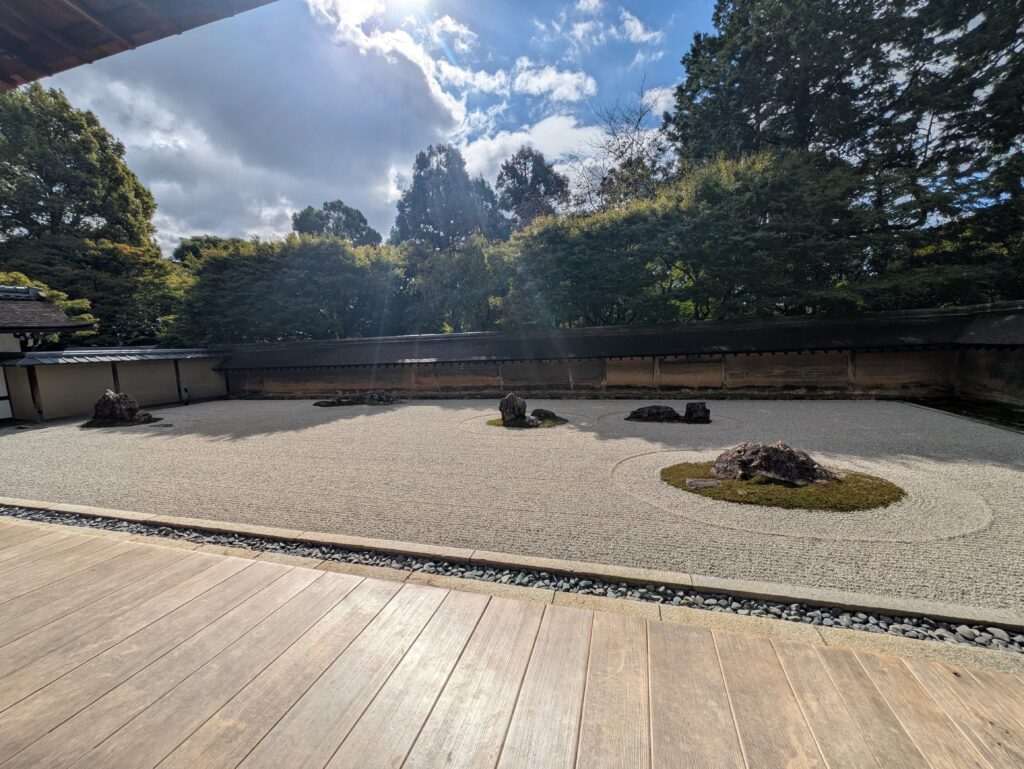
京都・右京区にある龍安寺(りょうあんじ)は、世界中の人々を魅了する石庭で知られています。
金閣寺や仁和寺の近くにありながら、観光地の喧騒を離れたこの場所には時間がゆっくりと流れるような静けさがあります。石庭の前で心静かに自分を見つめなおす良い時間をお過ごしください。
- 龍安寺を理解する5つのポイント
- 龍安寺の歴史 The history of Ryoan-ji Temple
- 龍安寺の石庭「不完全の美」The Rock Garden:The beauty of Imperfection
- 鏡容池(きょうようち)ー池に映る四季 KyoyochiPond:Seasonal Reflections
- 吾唯足知(われただたるをしる)のつくばいThe Stone Basin Inscribed ‘Ware Tada Taru o Shiru(“I Learn Only to Be Content”)’
- 世界遺産としての静けさ The Serenity of a UNESCO World Heritage Site
- アクセス方法 Access Information
- 周辺情報 / Nearby Spots
- 全国通訳案内士 対策ポイント
龍安寺を理解する5つのポイント
龍安寺の歴史 The history of Ryoan-ji Temple
龍安寺は1540年、室町時代の武将・細川勝元によって創建されました。
臨済宗妙心寺派の寺院で、かつては貴族や武士が精神修養の場として訪れたといわれています。
創建当時は広大な寺域を持っていましたが、戦乱や火災でたびたび焼失し、現在の姿に再建されたのは江戸時代に入ってからです。
龍安寺の最大の見どころである石庭は、いつ誰がつくったのか明確には分かっていません。
作者については、細川家に仕えた僧・義天や、庭師・相阿弥など諸説がありますが、いずれも確証はありません。
だからこそ、見る人によって感じ方が違う「謎の庭」として、世界中の人を魅了し続けています。
Ryoan-ji Temple belongs to the Rinzai sect of Zen Buddism and was founded around 1450 by Hosokawa Katsumoto, a feudal lord from the Muromachi period(1336-1573). The temple was destroyed several times by fires and wars, and its present form dates back to the Edo period(1603-1868).
The famous rock garden, whose creator remains unknown, is one of Japan’s most mysterious and admires Zen gardens. Various theories exist, but none are proven-adding ti its timeless allure.
龍安寺の石庭「不完全の美」The Rock Garden:The beauty of Imperfection
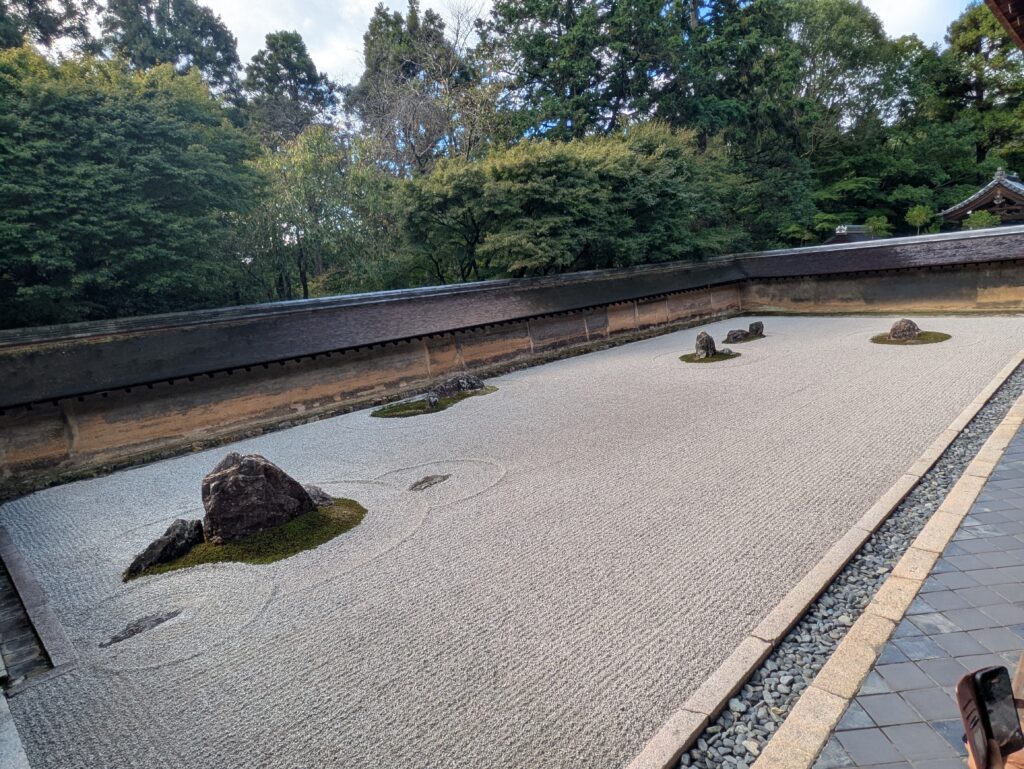
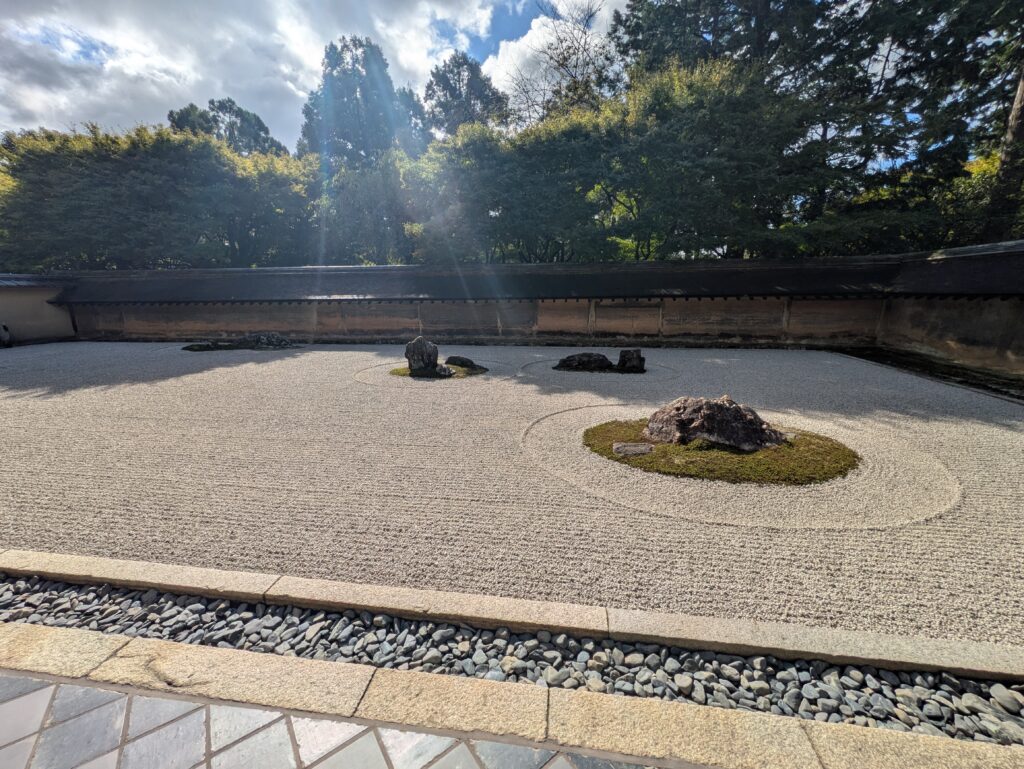
龍安寺の石庭には、白砂の上に大小15個の石が配されています。
どこから見ても、15個すべてを同時に見ることはできません。この配置には特定の作者や設計図がなく、見る人によって意味が変わると言われています。
左から、「比叡山」「くじら」「とら(親+子2匹)」「かめ」「羽を広げた鳥」と見立て、15個のうち1個だけ見えない石は、自分自身であり、心静かに自分自身と向き合う大切さを伝えているという説もあります。
禅の思想「不完全こそが完全」という考え方が、この小さな庭の中に凝縮されています。
At Ryoan-ji, the famous rock garden features 15 stones of various sizes arranged on white gravel.
No matter where you stand, you can never see all 15 stones at once. There is no known designer or fixed plan, and the meaning of the arrangement is said to change depending on the viewer.
Some people interpret the stones as different figures: from left to right, a mountain of Hiei, a whale, a tiger (mother and two cubs), a turtle, and a bird with spread wings. One stone that cannot be seen from any angle is said to represent oneself, reminding visitors of the importance of calmly facing their own mind.
This garden beautifully embodies a Zen concept: “Imperfection is perfection.”
鏡容池(きょうようち)ー池に映る四季 KyoyochiPond:Seasonal Reflections
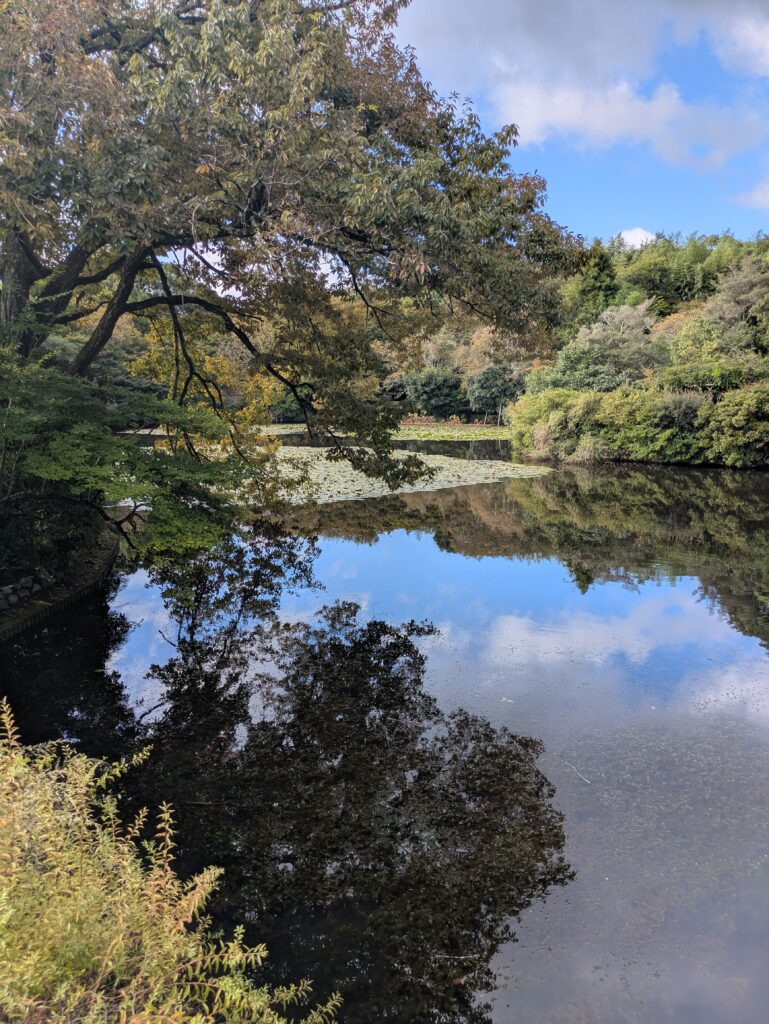
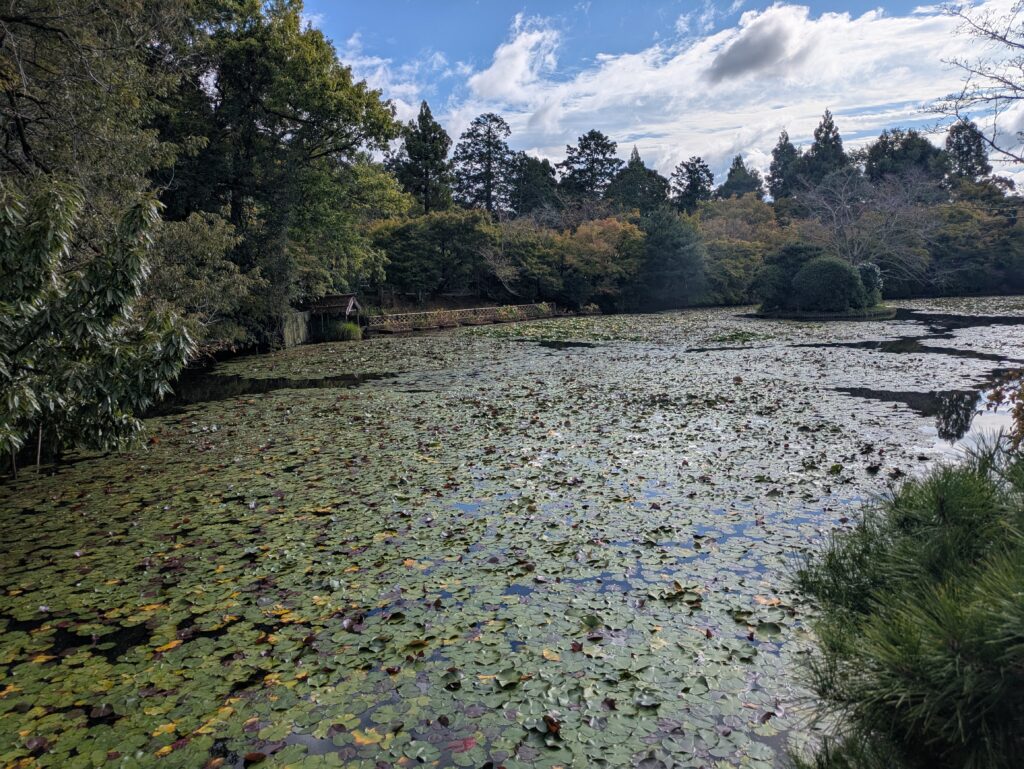
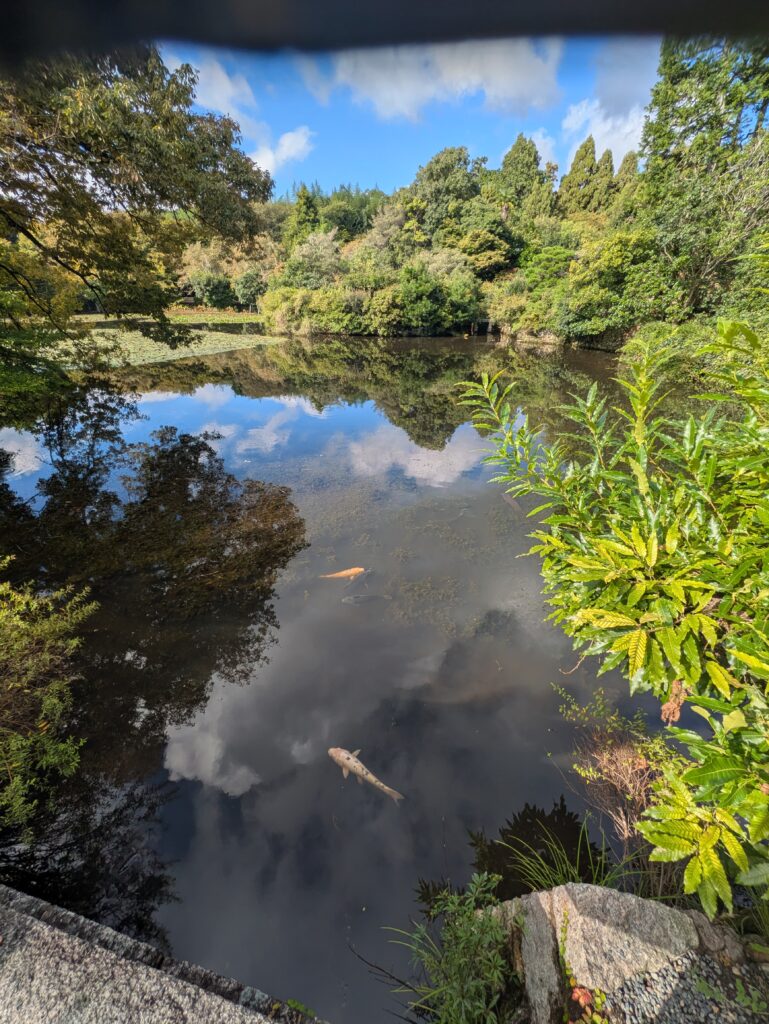
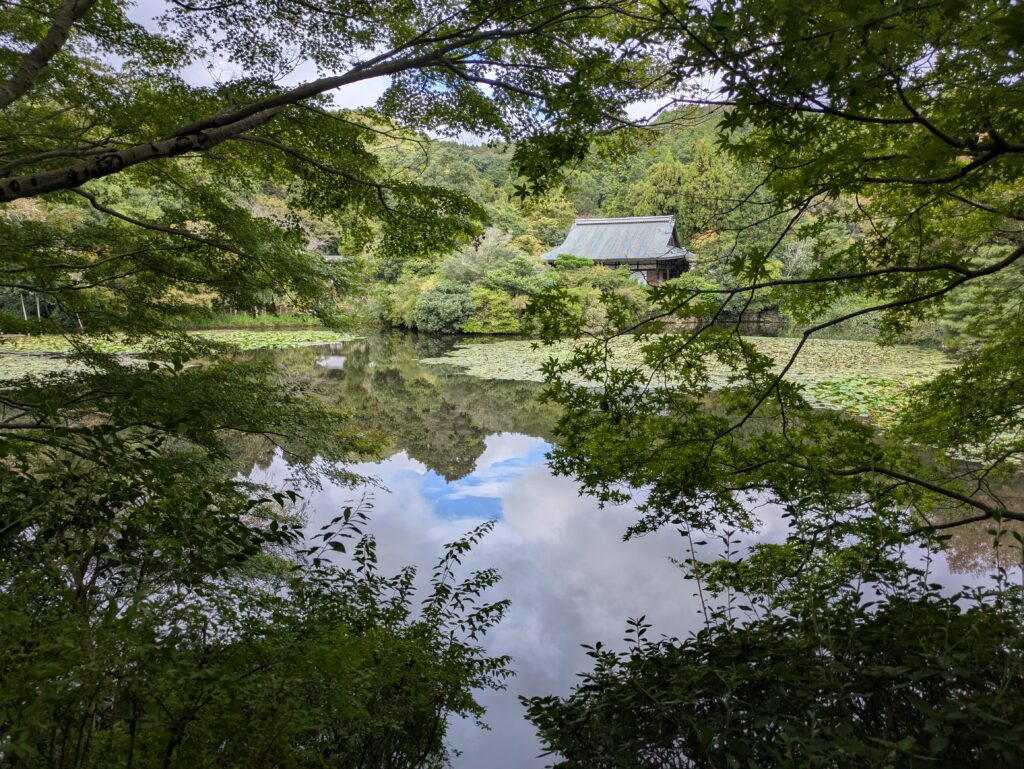
龍安寺の敷地に入ってすぐ目に入るのが、鏡のように静かな水面をたたえる鏡容池。
この池は、寺が建つ前からあったもので、かつては貴族の別荘の庭園だったと伝えられています。
春には桜、夏は新緑、秋には紅葉が水面を彩り、冬には雪景色が映り込みます。
石庭の「無」とこの池の「豊かさ」に触れると、禅が大切にする「静」と「動」の調和が自然と伝わってきます。
As soon as you enter the grounds of Ryoan-ji, you are greeted by Kyoyochi Pond, its surface calm and reflective like a mirror.
The pond predates the temple itself and is said to have once been part of a noble’s villa garden.
In spring, cherry blossoms decorate the water; in summer, the fresh greenery is reflected; autumn brings colorful maple leaves, and winter’s snow creates a serene white landscape.
Experiencing the “emptiness” of the rock garden alongside the “richness” of the pond allows visitors to feel the Zen concept of balance between stillness and movement.
吾唯足知(われただたるをしる)のつくばいThe Stone Basin Inscribed ‘Ware Tada Taru o Shiru(“I Learn Only to Be Content”)’
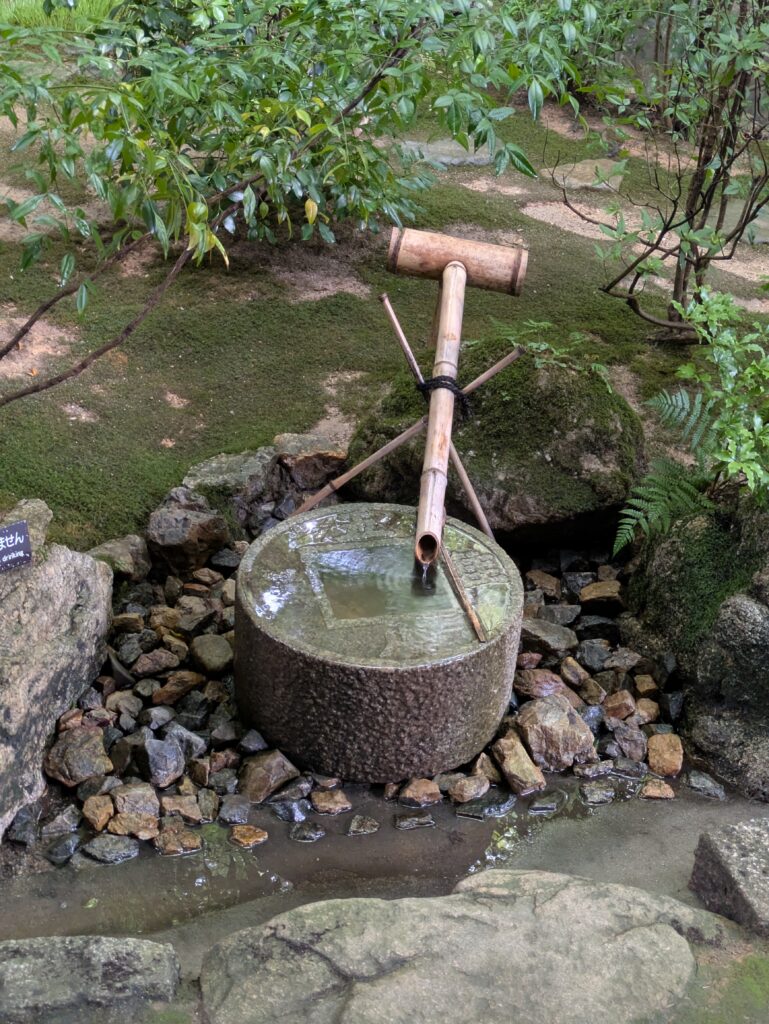
方丈の裏手には、小さな石の手水鉢(つくばい)があります。
真ん中の資格を囲むように、「吾唯足知」と刻まれています。
意味は、「我、ただ足るを知る」ー「足るを知る者は富む」という禅の教えです。
この石は、水戸黄門で知られる徳川光圀が寄進したと言われ、控えめながらも深い哲理を感じさせる存在です。
Behind the main hall (Hojo) is a small stone water basin, or tsukubai.
Around the central square, the words “吾唯足知 (Ware Tada Taru o Shiru)” are inscribed.
This phrase means “I learn only to be content”, reflecting the Zen teaching that those who know sufficiency are truly rich.
It is said that this stone was donated by Tokugawa Mitsukuni, also known as Mito Komon. Though simple in appearance, it carries a profound philosophical message.
世界遺産としての静けさ The Serenity of a UNESCO World Heritage Site
1994年、龍安寺は「古都京都の文化財」としてユネスコ世界遺産に登録されました。
金閣寺の華やかさとは対照的に、龍安寺が伝えるのは「何もないことの美」。
白砂と石、そして静寂が、心の中の空白を映し出してくれるようです。
In 1994, Ryoan-ji was registered as a UNESCO World Heritage Site as part of the “Historic Monuments of Ancient Kyoto.”
In contrast to the brilliance of Kinkaku-ji, Ryoan-ji conveys the beauty of emptiness.
The white gravel, stones, and serene atmosphere seem to reflect the quiet space within one’s own mind.
アクセス方法 Access Information
住所 / address
住所
〠616-8001 京都市右京区龍安寺御陵下町13
13 Goryo-shita-machi, Ukyo-ku, Kyoto 616-8001,Japan
アクセス / Transportation
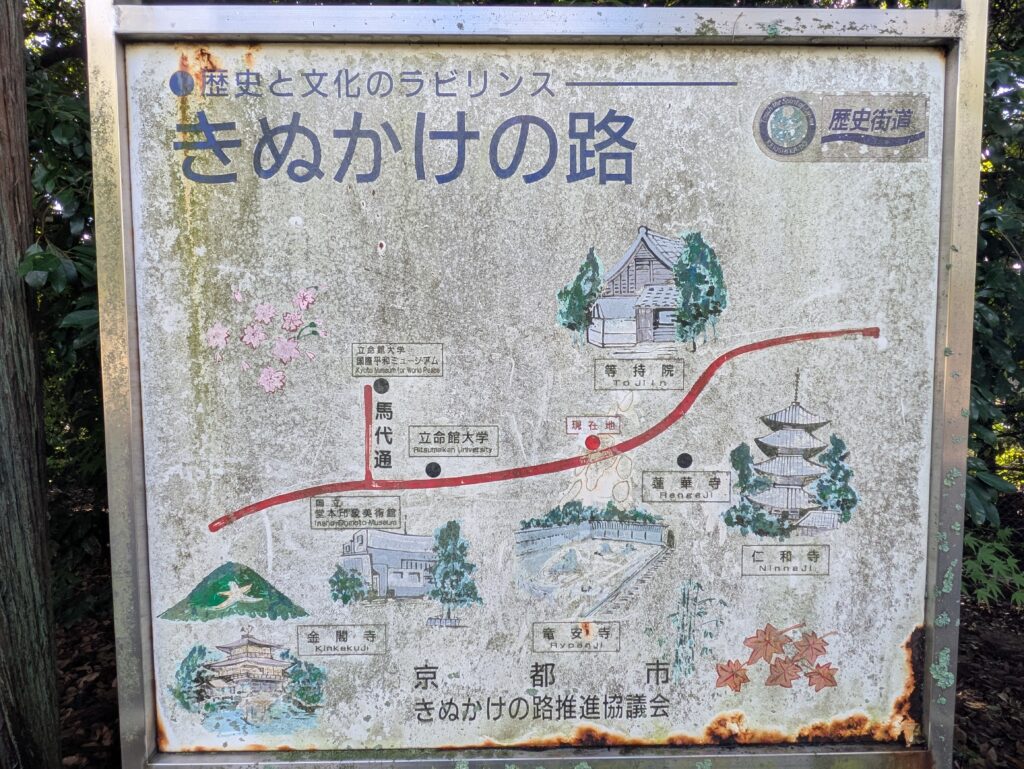
🚋嵐電「龍安寺駅」から徒歩約7分
Randen(Keihuku)Kitano Line-Get off at “Ryoanji Station”, approx. 7 minutes on foot
🚌市バス
○京都駅から ⇒ 50番系統「立命館大学前」から徒歩約7分
○阪急電鉄 大宮駅から ⇒ 52、55番系統「立命館大学前」から徒歩約7分
○京阪電鉄 三条駅から ⇒ 59番系統「龍安寺前」下車すぐ
From Kyoto Station →Bus No. 50 “Ritsumeikan Daigaku‑mae”, then approx. 7 minutes on foot
From Ōmiya Station (Kyoto) (Hankyu) → Bus No. 52 or 55 “Ritsumeikan Daigaku‑mae”, then approx. 7 minutes on foot
From Sanjo Station (Keihan) → Bus No. 59 “Ryoanji‑mae” stop, right in front of the temple
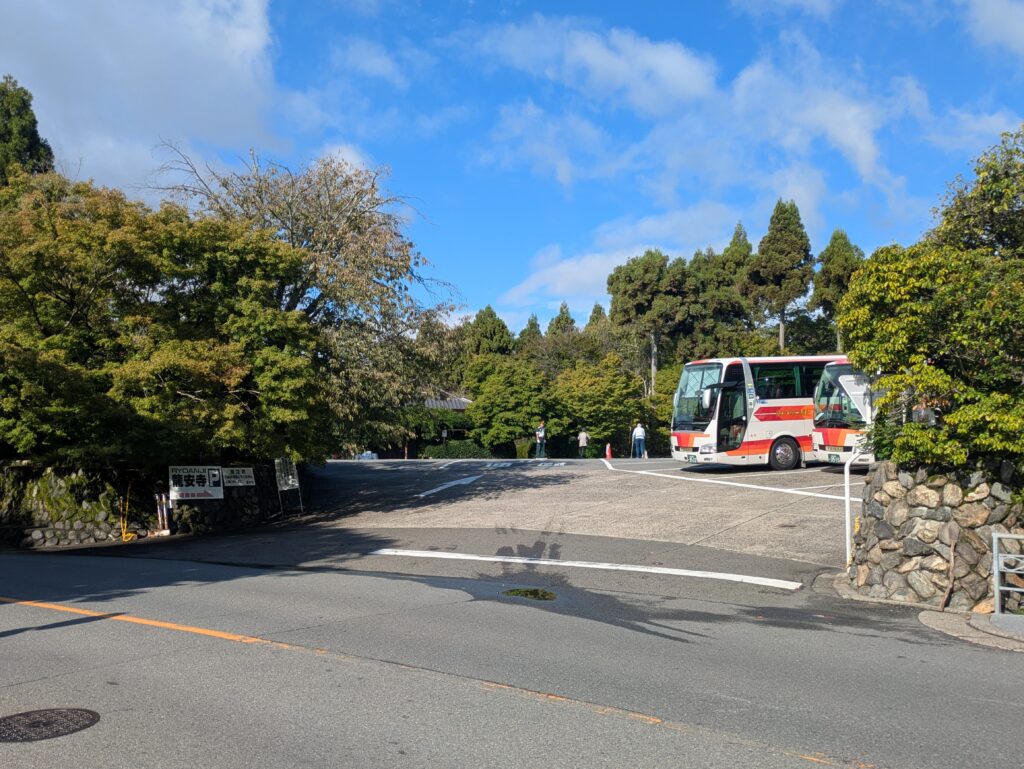
By car – Parking is available inside the grounds. Free for 1 hour for visitors to the rock garden
🚙車
敷地内に駐車場あり。石庭拝観者に限り1時間無料です。
By car – Parking is available inside the grounds. Free for 1 hour for visitors to the rock garden
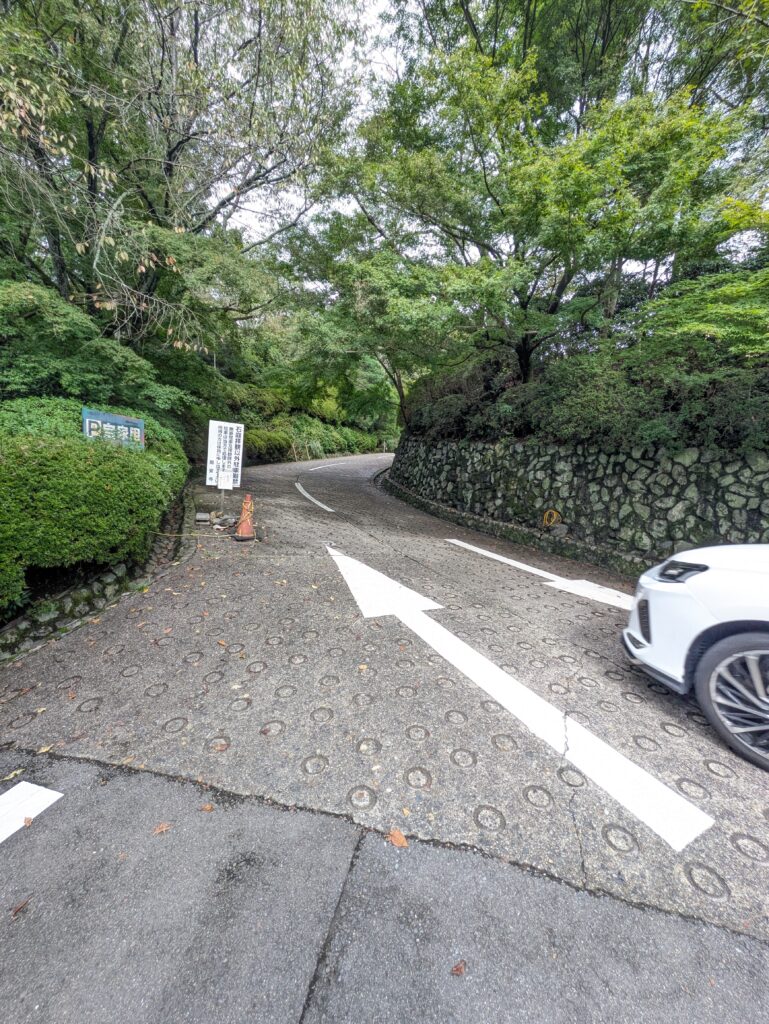
🚶 金閣寺から龍安寺までは徒歩で約20分
(散策がてら歩くのも気持ちよい距離です)
Walking from Kinkaku‑ji → Ryoan‑ji takes about 20 minutes (and can be a pleasant stroll)
拝観時間・拝観料金 / Visiting Hours & Admission Fees
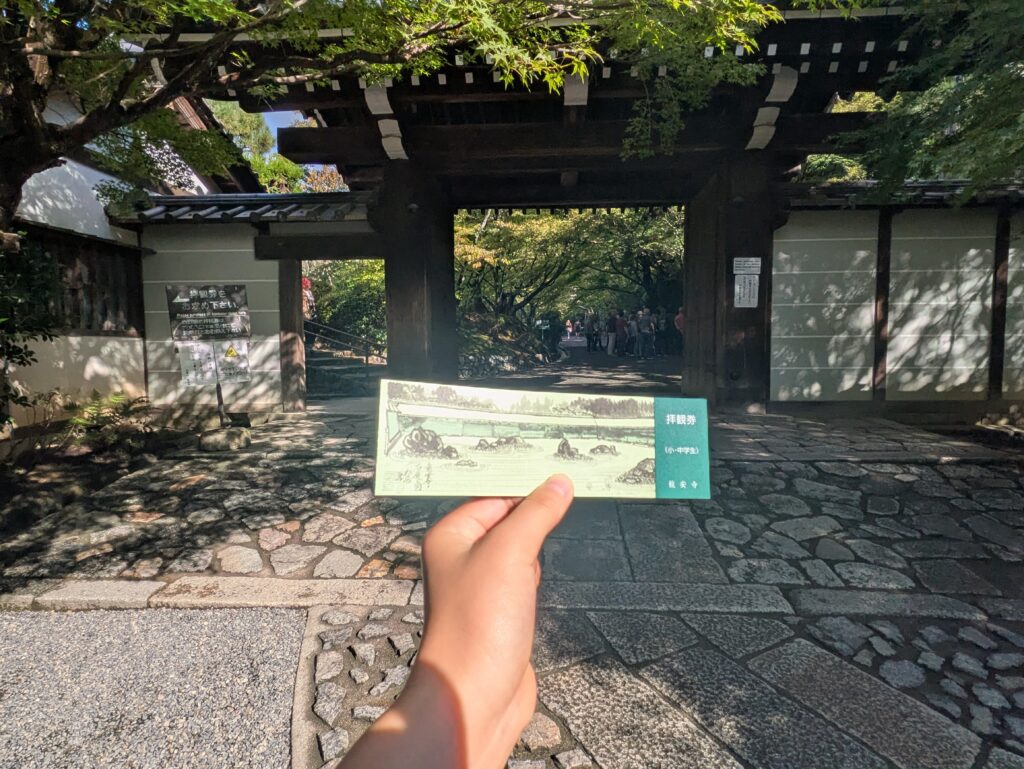
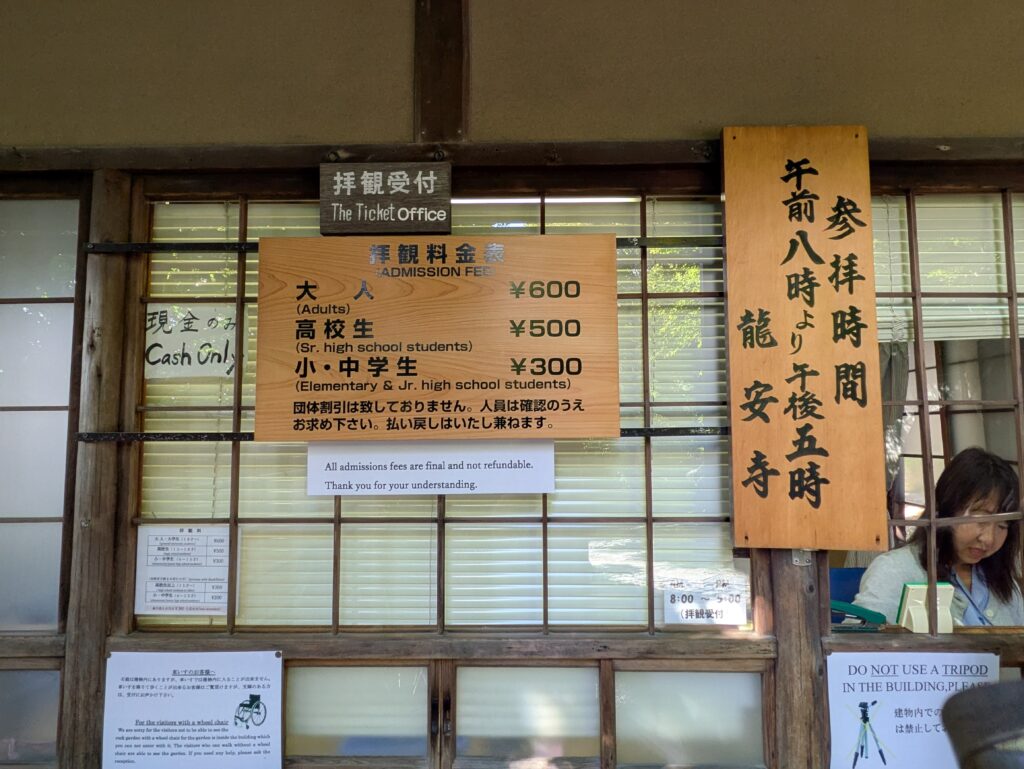
🕑拝観時間
8時~5時(3月~11月) 8時30分~4時30分(12月~2月)
🎫拝観料
大人 600円 高校生 500円 小・中学生 300円
※石庭の拝観料です。鏡容池の散策は自由にできます。
周辺には金閣寺や仁和寺があり、「洛西三寺めぐり」として一日でまわるのもオススメです!
距離が近いので、徒歩やバスで半日あればゆっくり巡ることができます。
洛西三寺(らくさいさんじ)めぐり
龍安寺は「洛西三寺」と呼ばれる、京都西部の三つの名刹の一つです。他の二つは「仁和寺(にんなじ)」aと「妙心寺(みょうしんじ)」であり、いずれも世界遺産に登録されている京都の西側(洛西エリア)を代表する寺院です。
周辺情報 / Nearby Spots
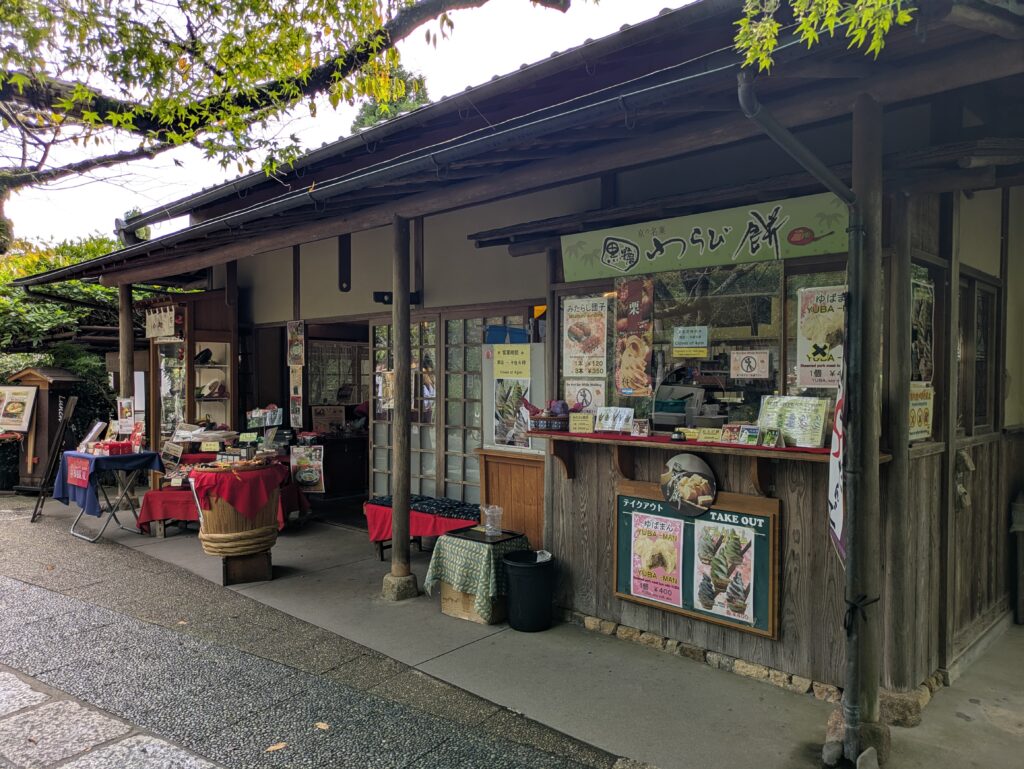
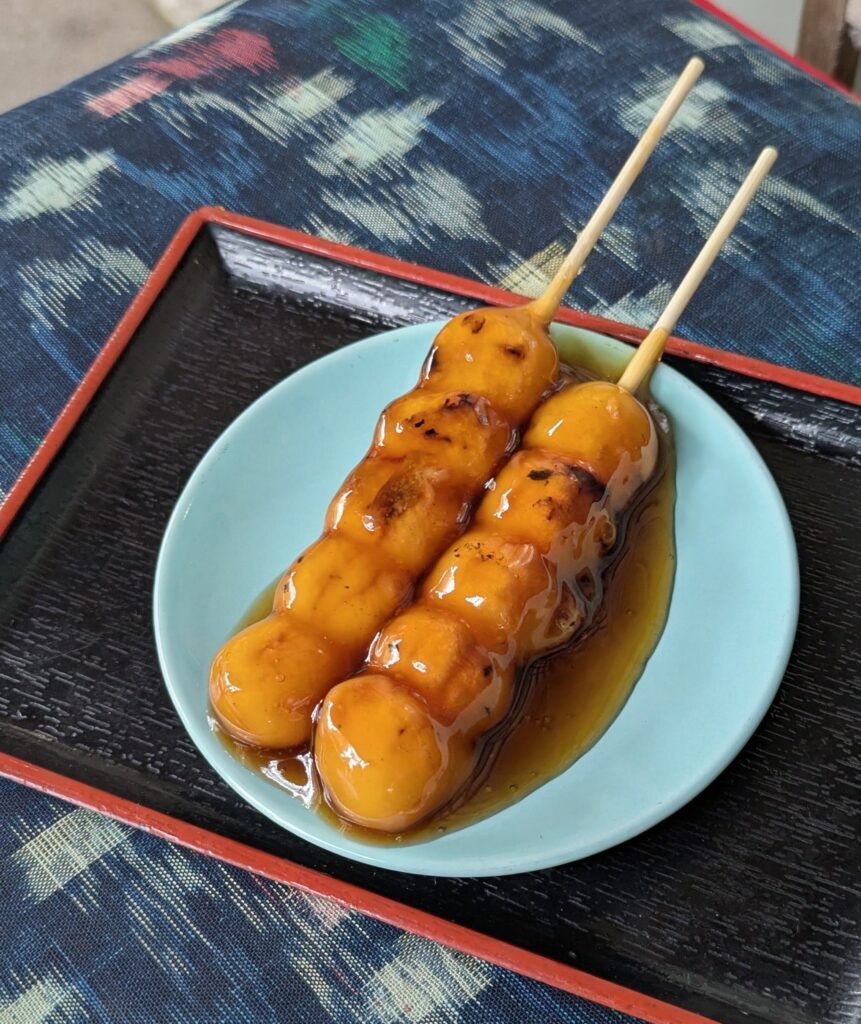
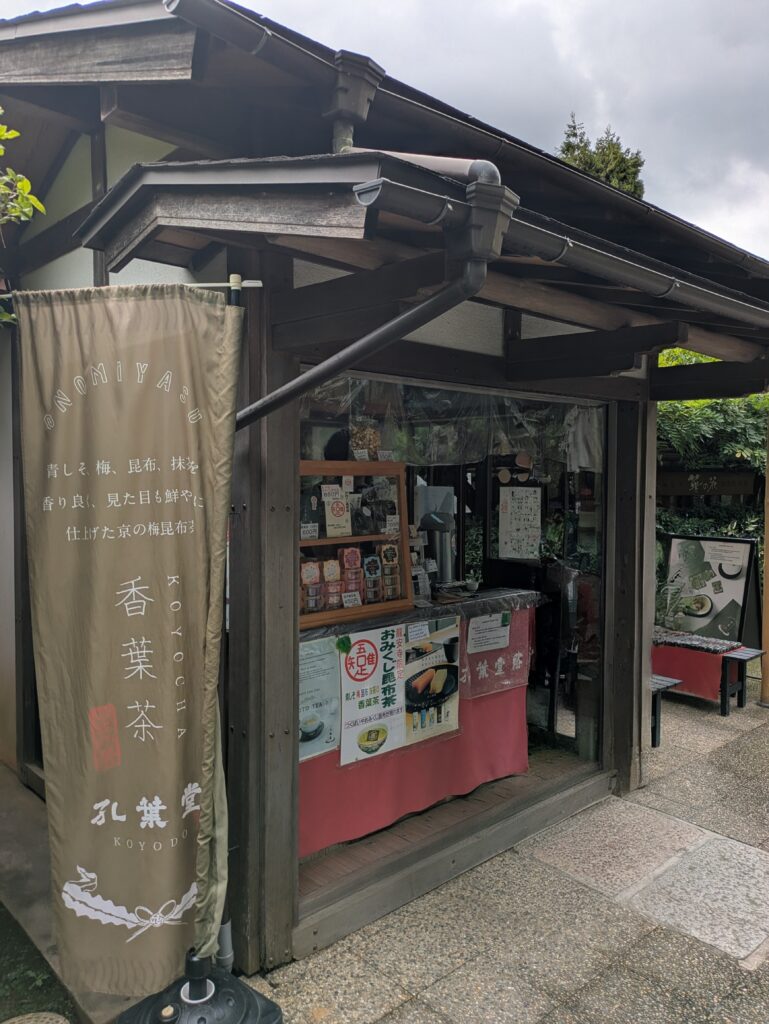
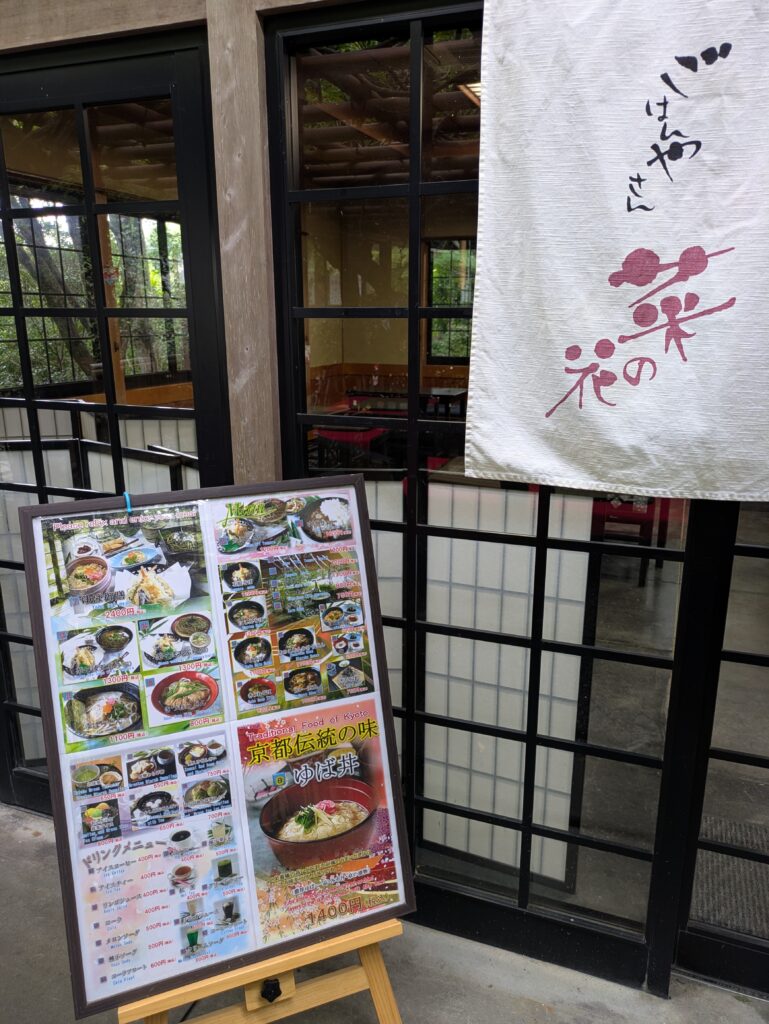
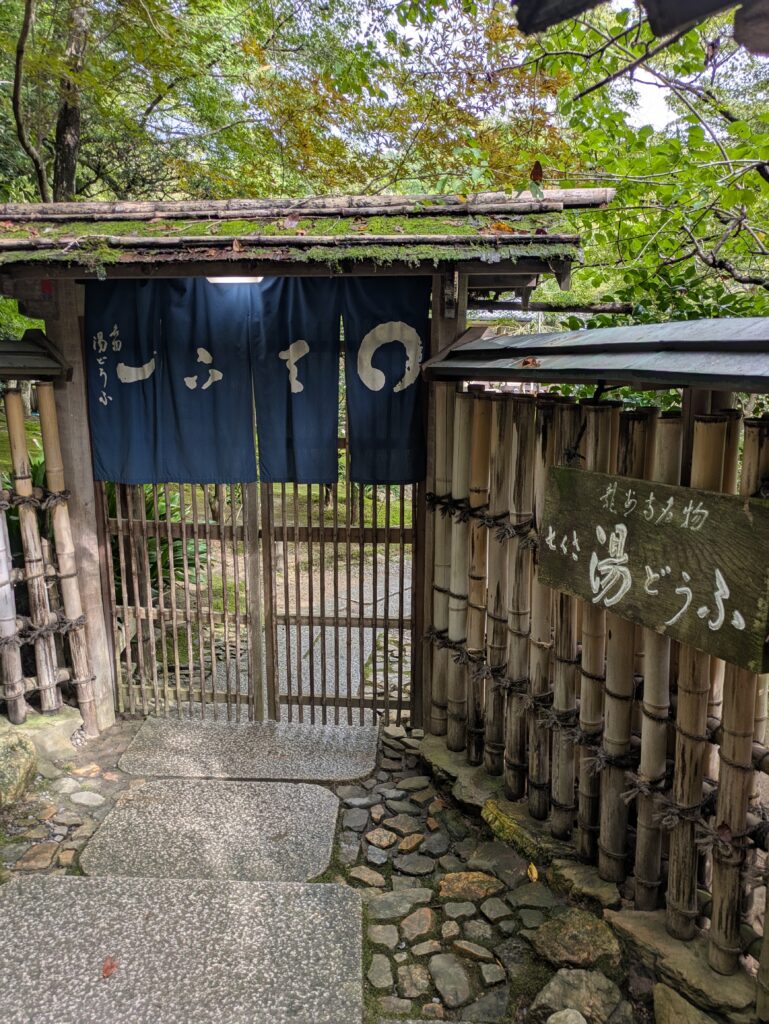
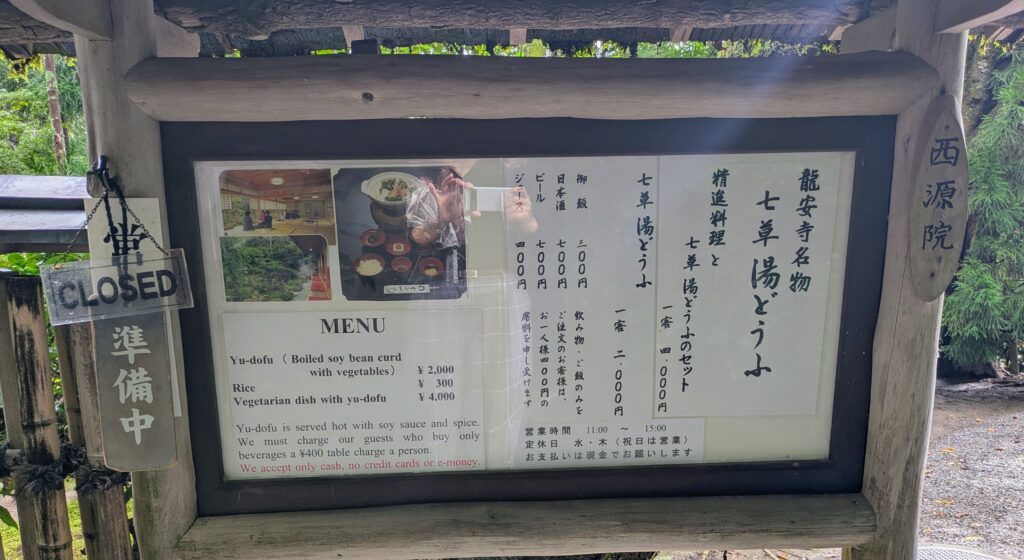
境内の北側には、広々とした鏡容池があり、四季折々の風景が楽しめます。龍安寺の敷地内には、京都名物の湯どうふ「西源院」、ごはんや「菜の花」や茶屋、門前にもお土産や京つけもの専門のお店もあり、龍安寺訪問時にふらりと立ち寄ることができます。また、龍安寺は世界遺産の「金閣寺」や「仁和寺」からも徒歩圏内であり、京都の洛西エリアをめぐるコースに最適です。近隣の立命館大学の向かいにある「京都府立堂本美術館」には、近代日本画の巨匠・堂本印象の作品を展示されています。(🕑9:30~17:00🎫510円)立命館大学国際平和ミュージアムでは、戦争の被害と加害両面から平和について考えることができます。(🕑9:30~16:30🎫400円)
Whithin Ryoan-ji, there are several places to stop by: Kyoto’s specialty yudofu (tofu hot pot) at Seigen-in, a casual rice restaurant Nanohana, and small tea houses. At the temple entrance, you can also find souvenir shops and a specialty store for Kyoto pickles, making it easy to drop by during your visit.
Ryoan-ji is also within walking distance of the UNESCO World Heritage sites Kinkaku-ji and Ninna-ji, making it ideal for a sightseeing course through Kyoto’s western (Rakusaī) area.
Nearby, across from Ritsumeikan University, the Kyoto Prefectural Domoto Insho Museum of Fine Arts exhibits works by Insho Domoto, a master of modern Japanese painting. (🕑 9:30 AM–5:00 PM 🎫 510 JPY)
At the Ritsumeikan University Museum of International Peace, visitors can reflect on peace by learning about both the victims and perpetrators of war. (🕑 9:30 AM–4:30 PM 🎫 400 JPY)
全国通訳案内士 対策ポイント
問1.龍安寺の創建者として正しいのは誰か。
①足利義満
②細川勝元
③豊臣秀吉
④徳川家康
問2.龍安寺の石庭に関して正しい説明はどれか。
①15個の石はどの角度からもすべて見える。
②作者は不明で、見る人によって印象が変わる。
③江戸時代に作られた。
④池に囲まれた庭園である。
問3.龍安寺のつくばいに刻まれた「吾唯足知(われただたるをしる)」の意味として正しいのはどれか。
①足るを知ることの大切さ
②努力を続けることの大切さ
③すべての石を数えること
④庭を守ることの重要性
問4.龍安寺が世界遺産に登録されたのはいつか。
①1987年
②1994年
③2001年
④2010年
問5.龍安寺の最寄り駅・バス停として正しいものはどれか。
①嵐電「龍安寺駅」、市バス「立命館大学前」
②JR「京都駅」、市バス「金閣寺前」
③地下鉄「東山駅」、市バス「南禅寺前」
④阪急「烏丸駅」、市バス「仁和寺前」
問6.鏡容池(きょうようち)の特徴として正しいものはどれか。
①石庭と同じく有料で拝観する。
②池の水面に四季折々の景色が映る。
③鎌倉時代に作られた石庭の一部である。
④池の周辺は立ち入り禁止で見学できない。
解答
1. ②(細川勝元)
2.②(作者は不明で見る人によって印象が変わる)
3.①(足るを知ることの」大切さ)
4.②(1994年)
5.①(嵐電「龍安寺」、市バス「立命館大学前」)
6.②(池の水面に四季折々の景色が映る)
コメント